Discover how the Galaxy platform is transforming biomedical research by making complex data analysis accessible to everyone. Learn how cloud computing is empowering collaboration, reproducibility, and innovation in the life sciences. In the era of big data, biomedical research generates vast amounts of complex data, from genomic sequences to high-resolution medical images. Managing and analyzing this data requires robust, scalable, and user-friendly platforms. One such platform making significant strides in this domain is Galaxy.
Introduction
In the era of big data, biomedical research is generating enormous volumes of information, ranging from genomic and transcriptomic sequences to high-resolution clinical imaging and multi-omics datasets. This explosion of complex data opens unprecedented opportunities for scientific discovery, but also brings significant technical challenges in terms of analysis, reproducibility, accessibility, and collaboration. Addressing these challenges requires digital infrastructures that combine power, transparency, and usability—qualities that define Galaxy, an open-source platform designed to make biomedical data analysis more accessible and reproducible.
A Web-Based Platform for All Researchers
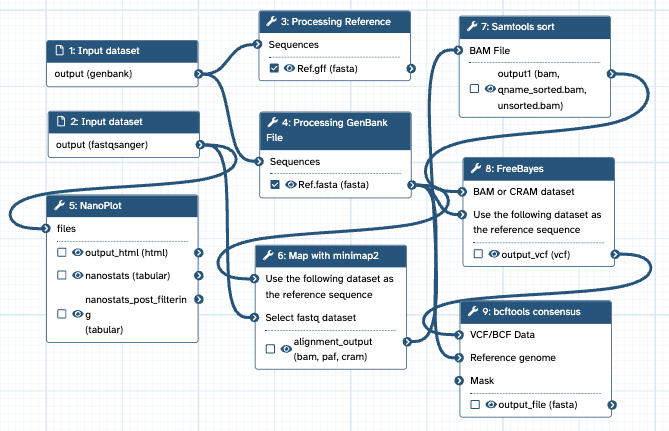
Galaxy is a web-based environment that allows researchers to build, execute, and share sophisticated computational workflows through a graphical interface, eliminating the need for programming knowledge. What began as a tool for simplifying genomic analyses has evolved into a comprehensive workbench for scientific computing, widely adopted in diverse fields such as genomics, transcriptomics, epigenomics, proteomics, metabolomics, and clinical diagnostics.
Its scalability is one of its core strengths. Galaxy can run on local servers, public clouds, or institutional high-performance clusters, all while maintaining a consistent and user-friendly experience. Researchers can work with large datasets and powerful tools without needing to manage the underlying infrastructure.
Accessibility and Reproducibility
Unlike traditional command-line approaches, Galaxy allows scientists to visually construct workflows and reuse them without writing code. Each analysis step is automatically logged—including tool versions and parameters—ensuring full reproducibility. This feature is crucial in modern research, where results must be transparent and verifiable.
Galaxy also promotes scientific collaboration. Entire workflows and datasets can be shared with colleagues or even the wider community. In large, multi-institutional projects, this level of traceability and standardization helps maintain consistent and reliable data analysis practices.
Open Access via Public Instances
One of Galaxy’s key contributions to biomedical research is its role in democratizing access to bioinformatics tools. Through public Galaxy servers such as:
- usegalaxy.org (USA)
- usegalaxy.eu (Europe)
- usegalaxy.org.au (Australia)
…scientists worldwide can access powerful analysis resources without needing their own hardware or specialized IT support. These community-maintained platforms offer thousands of tools, covering everything from sequence alignment and variant detection to statistical analysis, visualization, and even machine learning.
Applications in Biomedical Research
Galaxy is used across a wide range of biomedical disciplines:
In genomics, it supports workflows for genome assembly, variant calling, and annotation. In transcriptomics, it enables RNA-Seq analysis to explore gene expression, including workflows for single-cell data. In proteomics and metabolomics, researchers process mass spectrometry data to identify key biomarkers and investigate biological pathways. And in clinical research, Galaxy is used in genetic testing and pharmacogenomics, offering traceable workflows that support regulatory compliance and personalized medicine.
Community and Training
A distinguishing feature of Galaxy is its strong educational foundation. The Galaxy Training Network (GTN) provides hundreds of tutorials and domain-specific learning paths, covering everything from beginner topics to advanced multi-omics analysis. These tutorials are integrated directly into Galaxy instances and available in multiple languages, making them ideal for self-guided learning or structured academic courses.
The platform also benefits from an active open-source community. Developers and scientists around the world contribute to Galaxy’s continuous improvement through conferences, code sprints, and collaborative projects. This ensures that Galaxy stays at the forefront of bioinformatics while remaining grounded in the real needs of its users.
Conclusion
Galaxy is much more than a computational platform—it’s a scientific ecosystem. By integrating accessibility, reproducibility, and collaboration into a single interface, it empowers researchers to extract meaningful insights from complex biomedical datasets. Whether you’re investigating genomic variation, developing clinical workflows, or teaching students how to analyze transcriptomic data, Galaxy provides a flexible and reliable environment to support your goals.
To explore Galaxy and begin analyzing biomedical data in the cloud, visit usegalaxy.org.
References
-
Afgan, E., et al. (2022). The Galaxy platform for accessible, reproducible and collaborative biomedical analyses: 2022 update. Nucleic Acids Research, 50(W1), W345–W351. Nucleic Acids Research
-
Galaxy Project. (n.d.). Retrieved from About Galaxy
-
Galaxy Project. (n.d.). Galaxy Community Hub. Retrieved from Meet Galaxy - a data analysis universe